talque for Exhibitors & Sponsors: Visibility You Can Prove

The problem: sponsorship value often stays an assertion
Many organizers promise sponsors visibility but can't prove it afterwards. Logo placements are estimated rather than counted, booth visits go unrecorded, and the post-fair report often consists of a friendly email instead of verifiable numbers. For sponsors scrutinizing their budgets ever more closely, that becomes a risk to the next contract renewal.
For trade fair organizers where sponsorship makes up a substantial share of annual revenue, this gap is particularly risky. A single sponsor walking away after a disappointing evaluation can weigh more financially than several smaller ticket shortfalls combined. Which is exactly why it pays to address this before the first major sponsor has already gone.
The talque solution: visibility and interaction made measurable
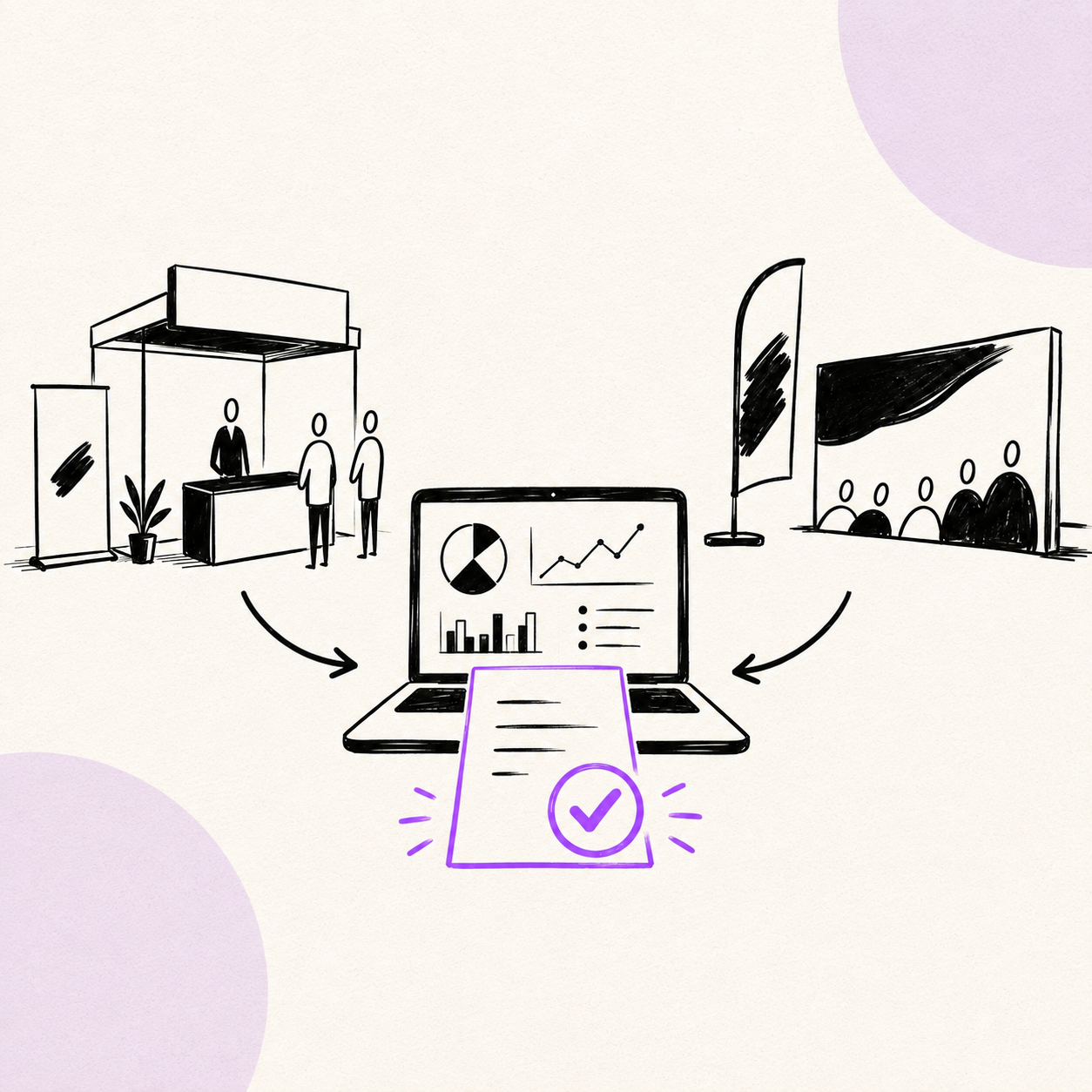
talque brings exhibitor and sponsor profiles directly into the event app and the other distribution channels, so every interaction with them can be captured without needing a separate, isolated system. Core functionality includes:
- Digital exhibitor and sponsor profiles with trackable impressions and clicks
- Lead capture right at the booth, digital instead of on paper
- Analyzable interaction data for every booked sponsorship tier
- Automatically generated post-event reports, understandable without technical expertise
What this means for your sponsorship sales team
Instead of selling sponsorship packages on vague visibility promises, your team can tie every tier to a concrete result that can be proven later. That makes not only the sale itself easier, but above all the renewal the following year, because the sponsor already knows what they got for their money instead of having to base it on trust again.
Internal collaboration between sales and marketing benefits too: both sides work from the same actually recorded data, rather than relying on each other's estimates that nobody can properly substantiate in the end.
For your team it also means less stress right after the event. Instead of laboriously pulling numbers from several sources in the days afterwards, the sponsorship report is essentially ready automatically once the event closes, ready to send to the sponsor.
The proof: in use at major trade fairs
talque is in use at events with high demands on exhibitor volume and sponsorship reporting, for instance at trade fairs such as NürnbergMesse. It's precisely in these environments that you find out whether a platform actually delivers sponsorship proof or merely promises it. These references are no coincidence, because large trade fairs with many parallel sponsorship tiers pose exactly the requirements talque was built for from the start.
Who this is worth it for
talque for Exhibitors & Sponsors is particularly worthwhile for organizers who:
- sell sponsorship packages and want to prove their value,
- want to base contract renewals on solid data rather than trust alone,
- want to capture booth visits and leads digitally instead of on paper.
Trade fair organizers with several tiered sponsorship levels in particular often report that provability at the upper tiers is what decides the renewal of large, important sponsors, far more than additional discounts or special terms ever could.
Next step
If you want to know what talque would look like specifically for your sponsorship packages, book a demo. In 30 minutes we'll show you how your current sponsorship tiers could be made measurable with talque, based on your own package structure rather than a standard presentation.
Feel free to bring your current sponsorship overview along, so we can look together, right there in the conversation, at where talque makes the biggest difference for your next contract negotiation and how quickly your team can put it in place.
That way your team spends the time after the event on the next sponsorship sale, instead of gathering numbers from several sources that nobody can fully reconcile anyway.
Next week the series continues with pillar 9, Analytics & ROI: why most organizers don't know exactly what really worked after the event.




.webp)
.webp)