The DISC model: A comprehensive overview of the four personality types

The DISC model: A comprehensive overview of the four personality types
The DISG model is one of the most popular tools in the area of personal development and professional development. Developed based on William Moulton Marston's theories, personality tests are a structured way to understand people's behavioral preferences and personality types.
A DISG test is a simple and effective tool for understanding people's personalities. Developed by William Marston, it divides people into four types. In his book “Emotions of Normal People,” he presents his theories about human behavior and personality types, which later formed the basis for the DISC model. A psychologist is thus able to better understand the behavior and communication styles of a person or colleague. The DISC personality test can be done quickly and easily. The DISC theory is widely used and is used by many companies to improve team collaboration. By understanding the different personality types, teams can work more effectively and conflicts can be resolved more easily. The DISC model also plays an important role in personal development. It helps to understand yourself and others better and thus improve interpersonal relationships.
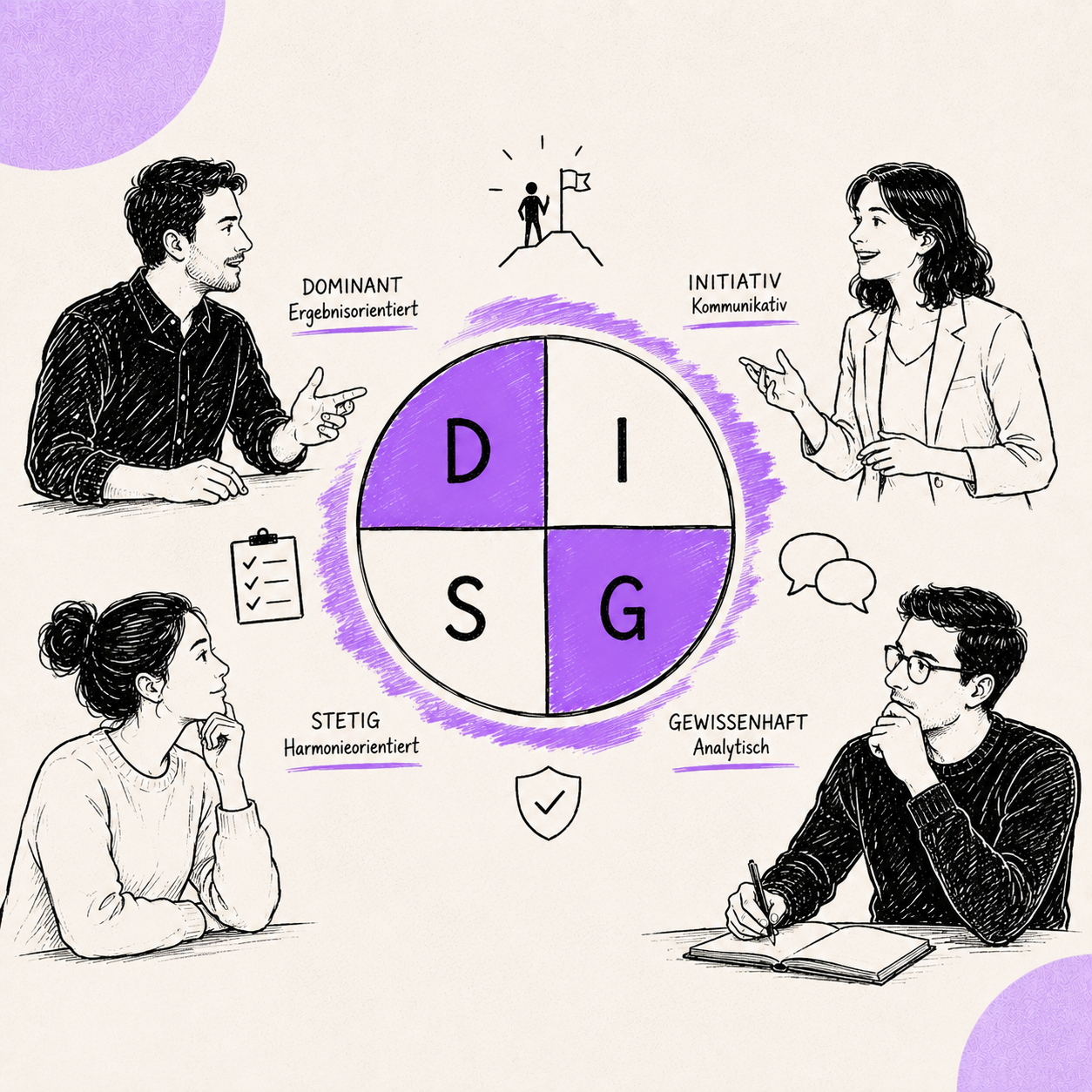
Introduction to the DISC model The DISC model helps to understand personality types. Four main types are identified as part of this test: dominant (D), initiative (I), continuous (S), and conscientious (G). The DISC personality test measures these types and is therefore often used in a corporate context. In the DISC model, specific colors are usually used to symbolize the four different personality types.
The color red is often used for the dominant type (D), which symbolizes energy, strength, and determination. The color yellow stands for the initiative type (I), which expresses enthusiasm, optimism and strong communication skills. The color green is the color for the continuous type (S), which represents support, reliability, and balance. The color blue represents the conscientious type (G), which stands for precision, attention to detail and analytical thinking.
The dominant type (D) in the DISC model: An insight In the DISC model, the letter D stands for the dominant type. This personality type is crucial, particularly in teams and management positions. Employees who are assigned to this type of DISC are characterized by certain behavioral styles.
What characterizes the dominant type? Dominant people are very determined. They set themselves clear goals and pursue them with great determination. Your approach is direct and pragmatic. These qualities make them strong leaders who are able to make quick decisions. Dominant types are the catalysts of change. They are not afraid of challenges and address problems proactively. They are competitive and strive to be the best. Communication and teamwork In communication, dominant types are very direct. They say what they think — and often without further ado. This directness can be very effective when quick decisions are required. However, it can also be perceived as too researchy or insensitive, particularly by colleagues who react more sensitively to interpersonal nuances. In a team, dominant personalities often set the standards and expect others to follow them. They can be great leaders if they learn to take others' opinions and feelings into account as well.
Potential challenges and criticism Despite their many strengths, dominant types can also face challenges. Their strong personality can lead to conflict, particularly when they work with other dominant or very conscientious types. They must therefore learn to adapt their direct nature, accept criticism and show more empathy in order to promote harmony.
The initiative type (I) The initiative person, often classified as “I” in the DISG test, is known for their energy and enthusiasm. They love interacting with others and aren't afraid to be the center of attention. Their open nature makes them popular team members and networkers.
Behavior style of initiative type Initiative People are optimistic and see the positive in every situation. Her strength lies in her ability to inspire and motivate others. They are often the ones who create a good atmosphere in teams and defuse conflicts through their charm and diplomacy. Working methods and communication In professional life, people with such traits prefer activities that require interaction with others. They are adept at communication and are able to present their ideas and visions convincingly. Their way of working may be less structured; they therefore prefer dynamic and flexible work environments in which they can freely develop their creativity. Importance in the team As colleagues, initiative types are essential when it comes to strengthening relationships and promoting group dynamics. Their ability to communicate and motivate others makes them excellent leaders in projects that require strong teamwork. Dealing with challenges Although the i-Type has many strengths, it also faces challenges. Your aversion to routine and structure can become a problem in certain professional situations. However, through self-reflection and targeted feedback from psychologists, they can learn to work effectively even in structured environments.
The continuous type (S) in the DISC model In DISC theory, the continuous type, “S” for short, stands for reliability and consistency. People of this type are the quiet forces in teams and organizations. They are patient, supportive and very loyal to their colleagues and the company. These qualities make them valuable team members, particularly in dynamic or stressful situations. Characteristics of the continuous type in DISC theory Continuous basic types prefer harmonious and conflict-free environments. They work hard to maintain good relationships and enjoy supporting others. Compared to the dominant type, this DISC profile is often more reserved and less direct. Her opportunities lie in her perseverance and her ability to motivate and support others.
Working methods and team dynamics In a professional context, the S-Type appreciates clear instructions and stable conditions. They don't like sudden changes or unexpected tasks. In teams, they often ensure balance and stability because they avoid conflicts and strive for consensus. Dealing with the S-type In order to work effectively with a continuous basic type, it is important to show appreciation for their work and to create an atmosphere of trust. Pressure and aggressive competition can demotivate them. Instead, they respond positively to recognition and a supportive working environment. Importance at work At work, the S-type plays a central role in maintaining corporate culture. Their loyalty and commitment to the team and the company is a stabilizing factor, particularly in times of change. They are also important for training new employees. The S-type in the DISC model shows how important balance and consistency are in any team or company. Their ability to help others and create a positive, supportive environment makes them essential, particularly in work areas that require high emotional intelligence. By understanding and appreciating the S-type, managers can create a more efficient and harmonious work environment.
The conscientious type (G) in the DISG personality model He is characterized by his methodical and detail-oriented nature. These people place great value on accuracy and are very careful in everything they do. They are the ones who always strive for regulatory compliance and perfection. Character traits of the G-type in DISC theory Conscientious types are often very analytical and logical. They prefer making plans and lists to make sure everything goes according to plan. Their strength lies in their ability to process complex information and perform in-depth analyses. They are usually cautious in their behavior when it comes to spontaneous decisions or risks. Working methods In a team, conscientious people ensure that all facts are checked and that all tasks are carried out precisely. Their attention to detail makes them valuable employees, particularly in areas that require a high level of accuracy. When communicating, they are often direct and clear. They appreciate it when others also pay attention to details and provide clear, structured information. Role in teams Conscientious types often play a decisive role in the quality assurance of projects. Her ability to focus on details and work systematically makes her ideal candidates for roles that require precision, such as in financial accounting, project management, or research. Tips for dealing with the G-type When working with conscientious people, it is important to show punctuality and reliability. Clear instructions and detailed plans are essential for them. Recognition of their thorough work and commitment to quality further increases their motivation. The DISC personality profile in event planning The use of the DISC model in event planning is crucial. Organizers use the understanding of the four personality types of the DISG test to improve communication and networking between participants. This increases the satisfaction and effectiveness of events. Application of the DISC model at talque Talque uses the insights of the DISC personality test to offer tailor-made features:
Matchmaking and networking: Talque's matchmaking function connects participants according to their interests and DISC personality profiles. This facilitates targeted contacts, particularly for proactive and consistent personality types. Event analytics: People with a conscientious personality type from the DISC model benefit from talque's detailed analyses to monitor events and ensure their success. Interactive event map: Dominant and adventurous participants find their way around easily and establish contacts quickly.
Benefits of the DISC model for event participants The DISC model enables participants to tailor their communication styles specifically to different personality types. This leads to more targeted discussions during the event. The model also makes networking easier: By understanding the DISC personality types, participants can adapt their network strategies so that they interact more successfully with different people. The result: This makes it easier for them to access people whose behavior and interests are in harmony with their own. At team events, knowledge of DISC types helps to organize groups in such a way that the strengths of each type are optimally used. In addition, the different personality types feel addressed and valued by adapting event content and activities. Last but not least, the DISC model allows participants to gain deeper insights into their own personality and behavior. This not only improves their self-perception, but also contributes to personal development. Conclusion: DISC types help with self-assessment The DISC model provides a framework for understanding human behaviors and personality types. By applying this model, individuals and organizations improve their communication skills and build more effective teams. The positive side effect: They increase their productivity and job satisfaction. The DISC model is therefore an ideal tool that makes the dynamics between people understandable and usable.