Participant CRM for Events: Why Multi-Event Thinking Is the Next Step

Most organizers think about their software choice within a single frame: the next event. Ticketing, agenda, check-in — everything is planned for exactly that one event. Once the event is over, planning for the next one practically starts from scratch again. This mindset was sufficient for a long time, but it increasingly becomes a disadvantage as soon as an organizer runs several formats a year on a regular basis.
The reason for this lies less in the software itself than in the thinking behind it. A system built for a single, self-contained event cannot simply learn multi-event thinking after the fact, no matter how many add-on features are layered on top of it.
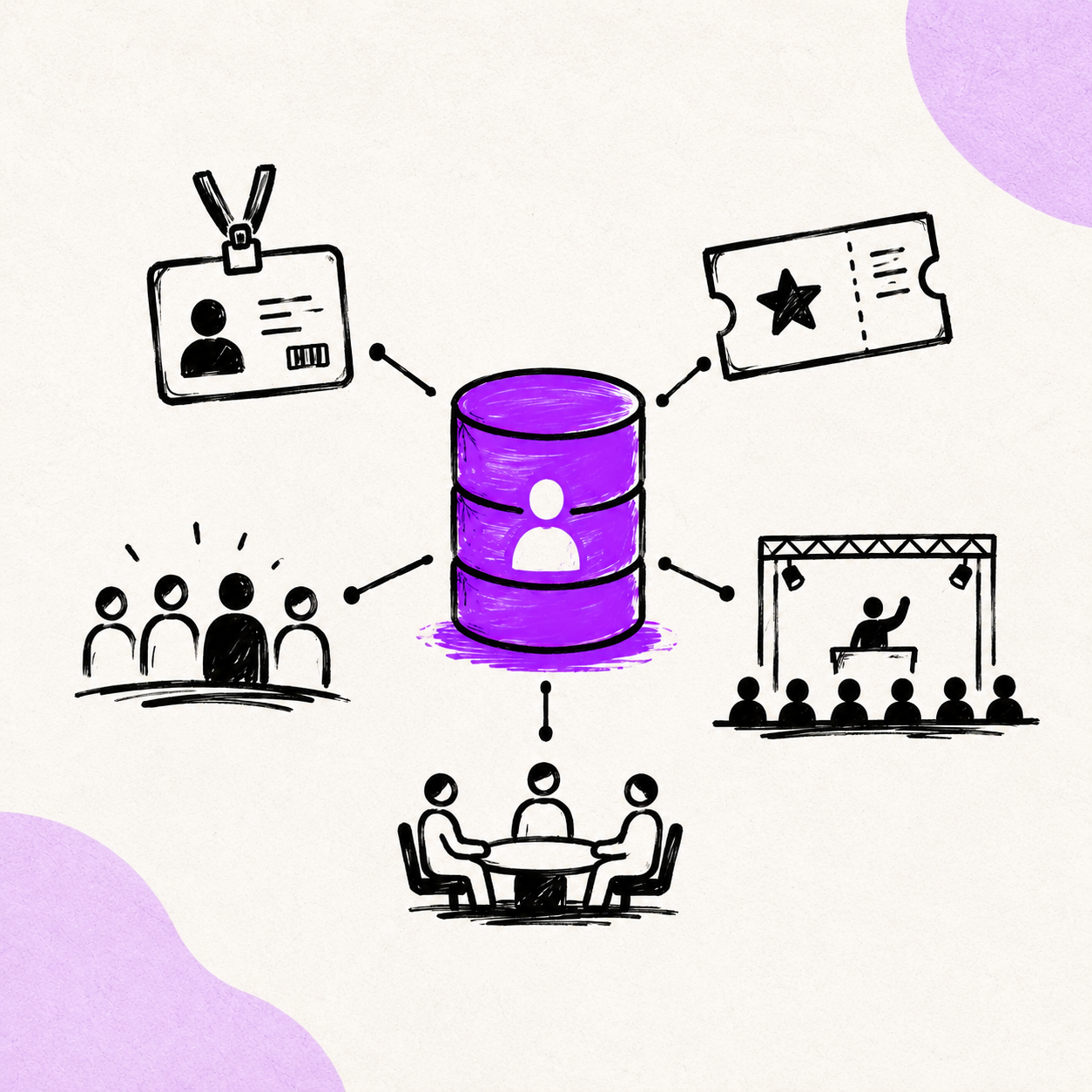
The difference between single-event software and a real participant CRM
Single-event software answers a limited question: who is attending this one event. A real participant CRM answers a broader question: who are the people interested in our topics, regardless of which specific event they last attended. This distinction sounds abstract at first, but it becomes very concrete as soon as you try to answer a simple question: how many of this year's participants were already with us last year.
With pure single-event software, this question can often only be answered with considerable manual effort, for example by cross-checking several export lists in a spreadsheet. With a real participant CRM, the answer is a glance at a dashboard, without anyone having to do extra work for it.
This difference doesn't just affect after-the-fact analysis, it also affects communication beforehand. A participant CRM lets you address returning participants differently from first-time visitors on purpose, for example with a personal look back at their last participation or a thank-you for their loyalty over several years.
Why multi-event thinking isn't a luxury problem
You might think this topic only concerns very large organizers with many parallel formats. In fact, a single, annually recurring event is enough for the question to arise. As soon as an organizer runs the same conference for the second time, a history already exists that's worth using, even if it's not formally a large-scale multi-event portfolio yet.
The mistake is often to treat multi-event capability as a future topic that only becomes relevant once a third or fourth format is added. In reality, the loss of value already begins with the second event, when the first one's data isn't carried forward, and it grows with every further event that repeats the same mistake.
Anyone who waits until the third or fourth event to tackle this ends up trying to retroactively merge several years of scattered data, which is considerably more work than maintaining a central data foundation from the start.
What a real participant CRM actually has to deliver
- A central people database that persists across individual events instead of starting over with every event.
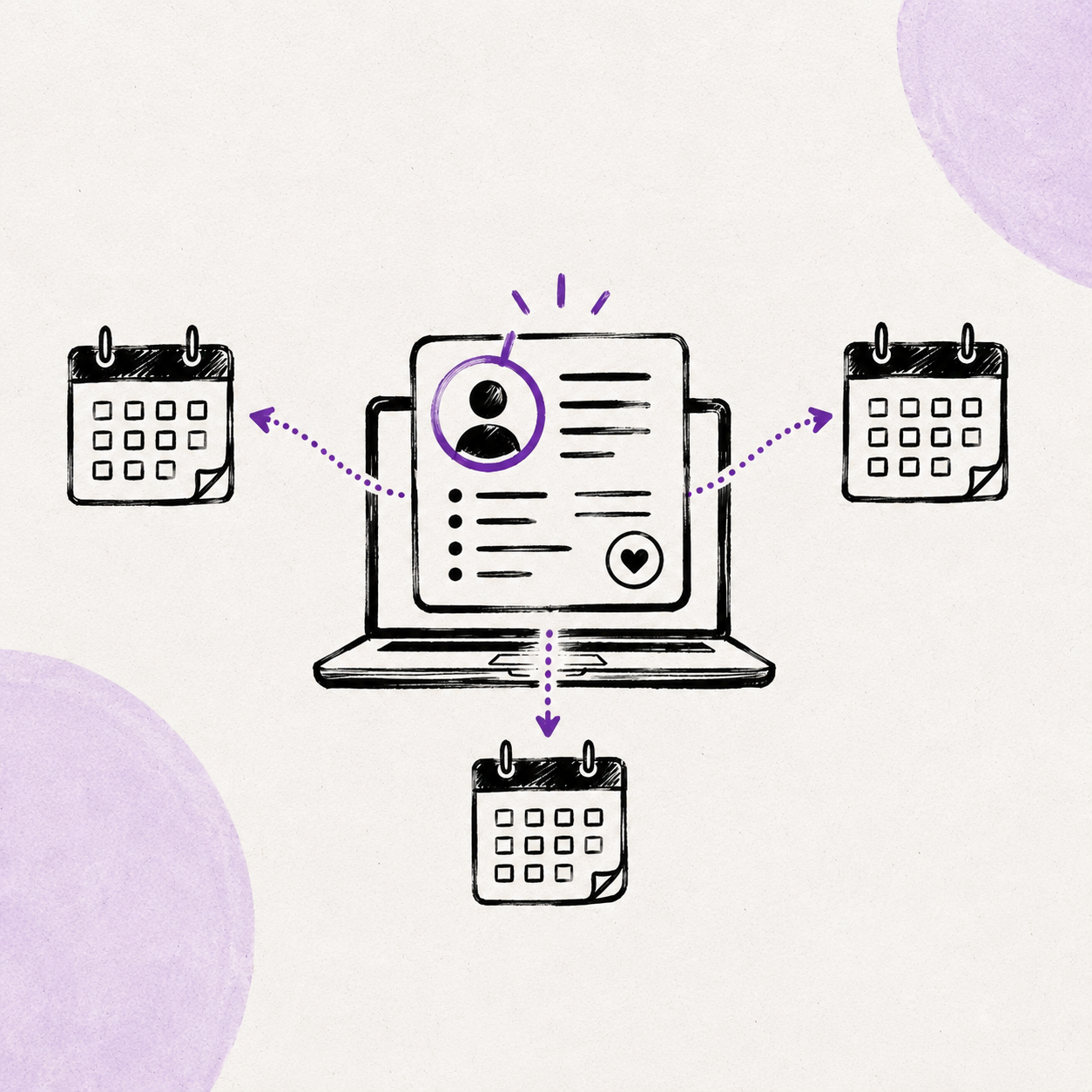
- Automatic matching of new registrations against existing contacts, so returning participants are recognized without manual effort.
- A traceable participation history per person, visible to everyone who communicates with that person.
- The ability to analyze the return rate across multiple events, without manually cross-checking several export lists.
- Data-protection-compliant management of this history, including clear consent and the ability to delete data.
What's often underestimated during the switch
Organizers switching from single-event thinking to a real participant CRM often don't underestimate the technology, but the data quality of their existing lists. Names captured in different spellings, email addresses that have changed over the years, duplicate entries from different registration forms: all of this makes automatic matching harder if it isn't cleaned up first.
This clean-up pays off regardless of which software you choose, because it forms the foundation for every later analysis. A good participant CRM helps with this, for example through automatic detection of similar entries, but it doesn't fully replace the task.
Data protection as part of the solution, not an obstacle
A central participant database rightly raises the question of data protection. Anyone storing data across multiple events has to clearly define what participants have consented to, how long data is kept, and how deletion on request works. A well-built participant CRM addresses these requirements from the start instead of bolting them on afterward.
This isn't a contradiction to the actual benefit, it's a precondition for participants feeling comfortable with their long-term stored history instead of feeling tracked without their knowledge.
A practical example
Picture two organizers who both run the same annual conference with five hundred participants. Organizer A doesn't know, after the fifth year, how many of their current participants have attended before. Organizer B can see at the push of a button that the core audience consists of around two hundred returning participants, plus three hundred new contacts each year.
After five years, Organizer B therefore has a solid overview of their own community, while Organizer A still only has a snapshot of the current year. This difference doesn't just affect sponsor conversations, it also affects strategic decisions such as program planning or choosing new venues, which should be guided by the real, long-term audience.
Organizer B can use this insight for targeted communication, for example special offers for long-standing participants or focused onboarding for first-time visitors. Organizer A treats both groups the same, because they can't technically tell them apart, even though both groups have completely different needs.
The difference is especially visible in conversations with sponsors. Organizer B can argue with a documented return-rate figure, while Organizer A has to rely on a vague estimate that rarely convinces in negotiations.
How to recognize a system that actually keeps up
When choosing a new solution, it's worth asking a concrete test question: show me how your system recognizes that a person registering for Event X right now already attended Event Y last year. Systems built for multi-event thinking answer this question immediately. Systems designed only for a single event dodge it or point to manual reconciliation.
How to plan the switch realistically
Switching to a real participant CRM doesn't have to happen in one single, large project. Many organizers start by first merging the data from the last two or three events, and only then automatically matching new registrations against that existing base. This creates a first, usable history within a few weeks, without having to work through the entire past all at once.
It's important to assign clear responsibility early on: who on the team maintains data quality, who decides on deletion requests, who analyzes the return rate for sponsor conversations. Without such ownership, even the best system goes unused, because no one sees themselves as the owner of the data.
A realistic timeline also helps make the switch feel like a project rather than a permanent construction site. Anyone who sets out to merge the data foundation of recent events within one quarter has a clear, achievable goal, instead of getting lost in an unlimited clean-up project.
Conclusion
Multi-event thinking isn't a feature for the future, it's a basic requirement as soon as an organizer runs more than one event, and that applies to most of them. Anyone who builds this foundation early builds real value over the years, instead of unknowingly giving it away again with every new event.
The effort required for the switch is usually smaller than it appears beforehand, while the benefit grows with every further event built on this shared data foundation.
What a solution looks like that builds in exactly this central participant database from the start is shown in the next article.
Once you've taken this step, you rarely go back to the old way of thinking, because the difference becomes visible again with every further event — both in the effort saved and in the knowledge gained about your own audience.
Continue reading: talque Participant Management, a database for all your events.