No Orientation, No Value: How Event Apps Guide Attendees Through Conferences

No Orientation, No Value: How Event Apps Guide Visitor Flows
Most events don't have a capacity problem, they have a distribution problem. Attendees are there, content is there, space is there – but they meet at the wrong time in the wrong place. The result is overcrowded sessions, empty side rooms and an event experience that feels fragmented. This is exactly where it is decided whether an event works or merely takes place. Without targeted visitor guidance, you don't create value, you create friction – and friction is what attendees feel immediately.
The real problem: movement without a system
At first glance, unmanaged visitor flows look like an organizational issue. In reality, it is a structural problem. People don't move randomly; they move based on information, expectations and visibility. If everyone sees the same plan, many make the same decision – and that is exactly where bottlenecks come from.
Typical patterns at events:
- Everyone streams to the main stage at the same time
- Side rooms and smaller sessions stay empty
- Paths, entrances or certain areas become overloaded
- Networking happens by chance instead of with purpose
Classic measures like signage or staff fall short here. They react, but they don't steer. The more complex the event, the more clearly this problem shows.
Why unmanaged visitor flows measurably weaken your event
The topic is often underestimated because it doesn't immediately show up as a “mistake”. But the effects are concrete and measurable.
For attendees, this means:
- time lost finding their way
- frustration from overcrowding or missed content
- fewer relevant contacts
For organizers, it means:
- inefficient use of space and program items
- uneven session performance
- no ability to steer while the event is running
In a B2B context in particular, this is critical. An event's value doesn't come from attendance but from relevant interaction. If that doesn't happen, the event loses substance – no matter how well it was planned.
The fallacy: more information leads to better orientation
Many organizers respond with more information. More plans, more notices, more communication. That seems logical, but often achieves the opposite.
When attendees see everything, they decide unspecifically. Orientation doesn't come from completeness, but from relevance.
The real mistake lies in assuming that information steers behavior. In truth, only context steers behavior. Attendees don't need a complete overview, they need clear, situational decision support. Only then does real distribution happen.
The solution: understanding visitor guidance as a dynamic system
Modern visitor guidance doesn't work through control but through targeted steering. Attendees move to where they see orientation and relevance. This is exactly where an event platform comes in.
The principle comes down to three core elements:
- Relevance: Attendees only see what really matters to them
- Context: Information is delivered situationally, not provided statically
- Real time: Steering happens during the event, not just in planning
This turns a static event into a dynamic system. Movements become visible, patterns recognizable and decisions controllable.
How to make visitor flows controllable
The first step is transparency. Without knowing what is happening at your event, you can't steer. You need a clear picture of where attendees are moving, which sessions are overloaded and where potential remains untapped.
Building on that comes the second lever: reducing complexity. Attendees shouldn't see everything, but what is relevant to them. A personalized agenda changes behavior immediately because it simplifies decisions.
The third lever is timing. Visitor flows emerge in the moment. Communication has to take effect exactly when attendees make decisions. That means:
- notices about free capacity
- targeted session reminders
- alternatives when sessions are overloaded
This is complemented by deliberately created spaces for movement such as networking or meetings. They ensure that attendees don't just concentrate at central points but use the event more broadly.
talque as a control system for visitor flows
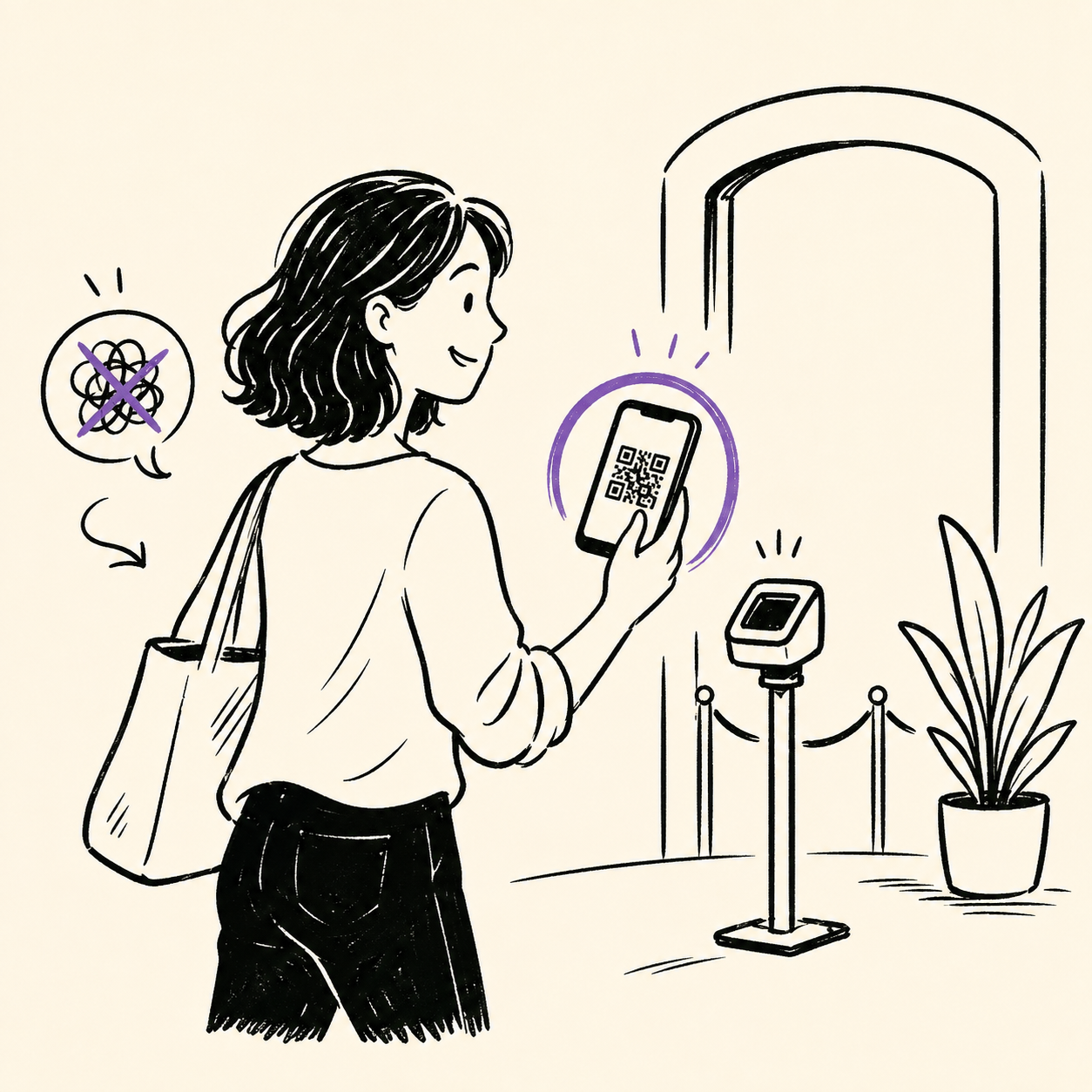
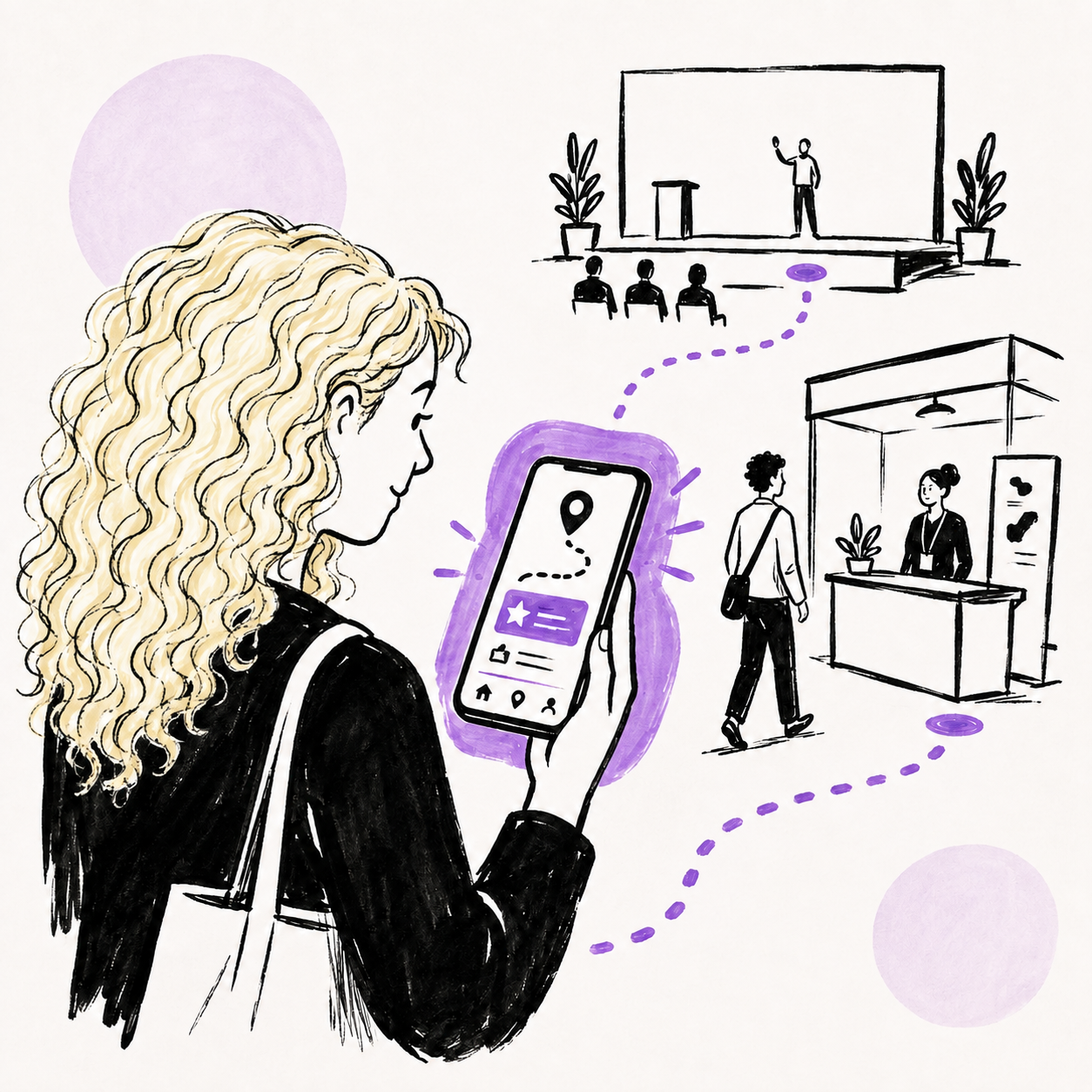
This is exactly where talque comes in. The platform is designed to structure behavior, not just display content. Attendees see a personalized agenda instead of a static program and therefore move through the event with more purpose. Push notifications step in at the right moment and actively direct attention.
At the same time, features like matchmaking and meetings create alternative places to be that work independently of central program items. This is complemented by clear navigation and interactive maps that create orientation instantly.
For organizers, this creates a new level of control:
- Movements become visible
- Bottlenecks are recognized early
- Real-time decisions become possible
The event is no longer just organized but actively steered – across its entire lifecycle.
The result: when orientation works, impact follows
As soon as visitor flows are guided in a targeted way, the event changes noticeably. Attendees find relevant content and contacts faster, content has a more even impact and space is used efficiently.
The result is not a “better organized” event but a better functioning system.
Conclusion: visitor flows determine real event success
Steering visitor flows is not an optional optimization but a basic requirement for events that work. If you leave attendees to their own devices, you lose control over experience, efficiency and impact.
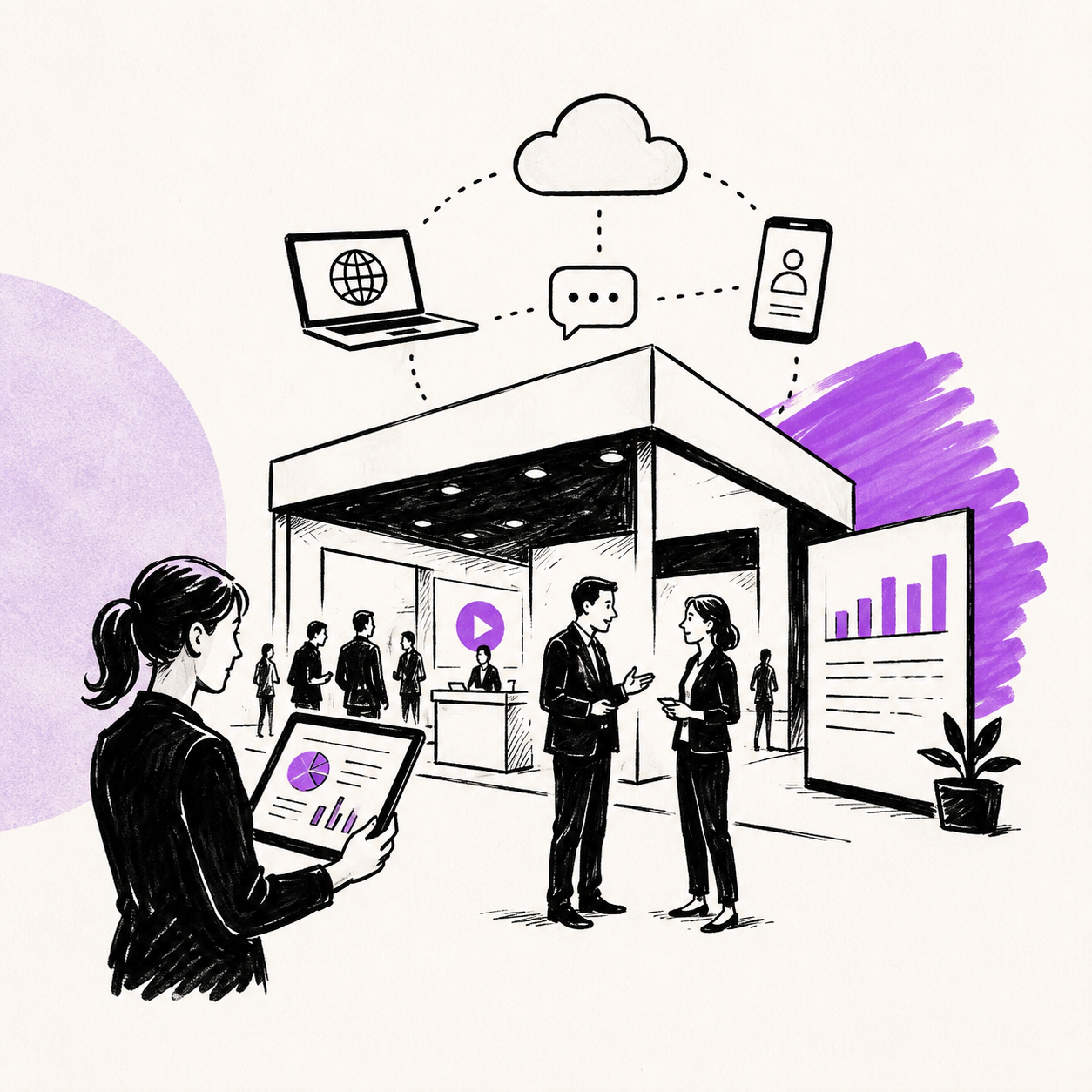
Modern event platforms make exactly this difference. They connect data, communication and interaction into a system that creates orientation – and thereby automatically guides behavior.