How Digitalization Keeps Trade Fairs Relevant: The Future of Live Communication

The trade fair industry has been undergoing transformation since long before the pandemic. Digital platforms, social media and online marketplaces have changed the standards for how products are presented, contacts are made and business is initiated.
At first glance, a direct comparison between a trade fair and a digital business event seems unfair: digital events are available anytime, scalable, measurable and often cheaper. But this comparison falls short.
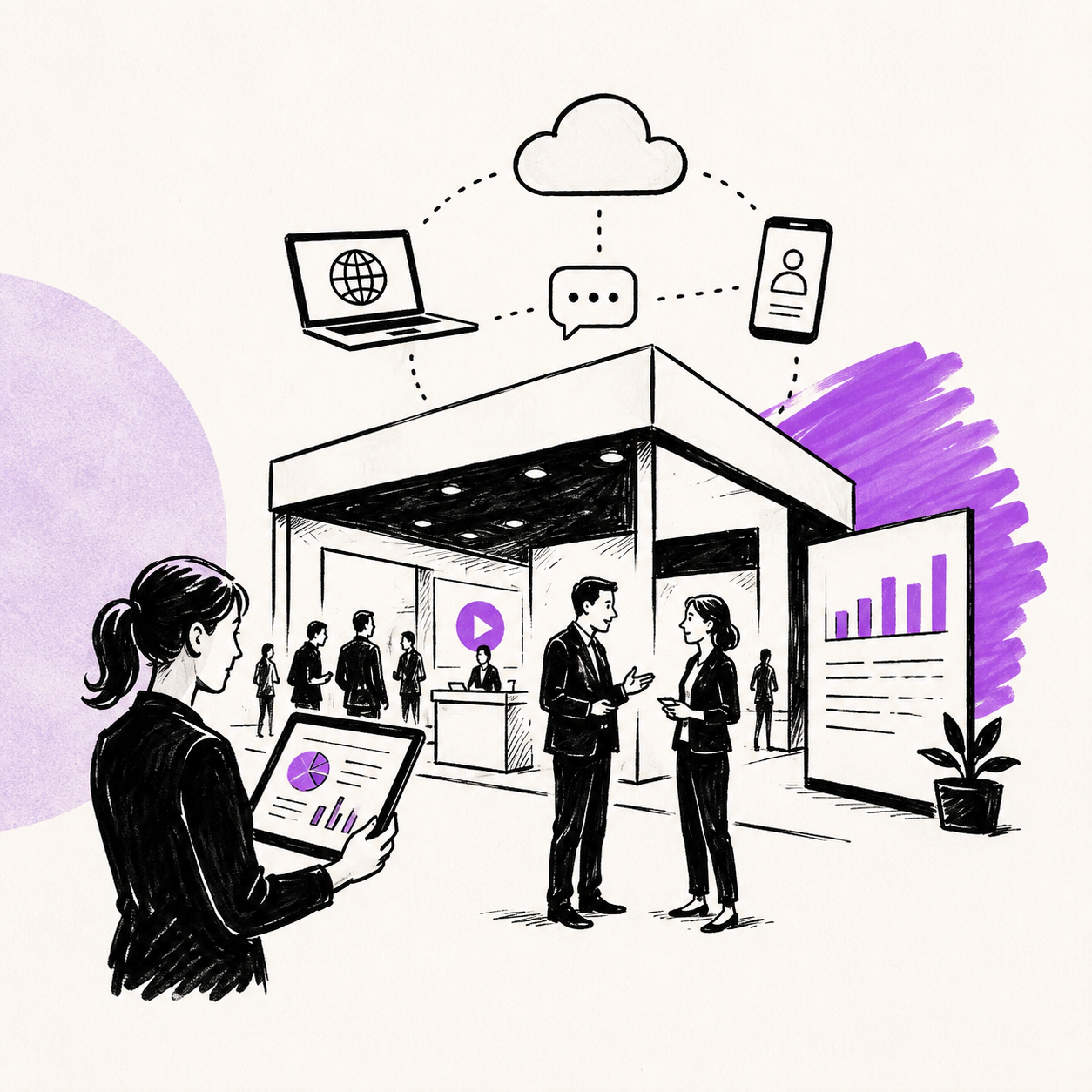
While digital channels deliver reach, trade fairs remain the place where trust is built, relationships deepen and decisions mature. The decisive change is therefore not about whether, but about how consistently digital tools are used along the entire trade fair process.
The new message to the event industry
Don't freeze in shock; move along, step by step. Digitalization is not a break but a development toward more efficiency and better results.
Digital tools don't replace personal contact; they structure, prioritize and extend it. This is exactly where modern event and trade fair platforms like talque come in: they turn individual event days into a continuous, measurable process before, during and after the trade fair.
The trade fair world in transition: from marketplaces to connected platforms
Trade fairs have always reflected their time. From the medieval marketplace through industrialization to the marketing and media stage of the 20th century, they have always fulfilled the same basic function: bringing people and trade together. That function has remained; the context has changed.
In the 21st century, trade fairs are no longer isolated events. They are part of a continuous communication and relationship process that is prepared and accompanied digitally. Contacts no longer happen by chance between two aisles; they are deliberately initiated, prioritized and deepened.
Platforms like talque make exactly that possible: attendee profiles, interest surveys and matching logic ensure that networking isn't left to chance, whether at hybrid or purely in-person events. Organizational effort goes down while the quality of contacts goes up. The core remains human; the framework becomes digital.
Today's trade fair landscape: experience instead of exhibition
Products can now be launched anytime, physically or online. As a result, trade fairs have lost their former role as an exclusive presentation venue. At the same time, this creates a new strength: the multisensory experience combined with digital preparation.
The focus is shifting noticeably:
- from product to experience
- from reach to relevance
- from chance to targeted networking
Visitors no longer come to trade fairs to collect information; that has long been available online. They come to put things in context, compare, build trust and prepare decisions. The physical experience remains central.
Modern trade fairs are therefore connected ecosystems. They inform weeks before the event, enable agenda planning, appointment scheduling and matching, and continue to accompany attendees after the event. With talque, the event doesn't end on the last day of the fair; it becomes a platform for lasting relationships.
Digitalization becomes the foundation of modern trade fairs
Digital technologies are no longer an add-on but the basis of modern trade fair formats. They create the structural conditions that make efficiency, relevance and measurability possible in the first place.
Efficiency is no longer a nice-to-have
The reality of many events is clear:
- shorter events
- smaller teams
- less time per attendee
At the same time, expectations of professionalism, measurability and ROI are rising. Digital tools are therefore no longer a supplement but a structural requirement.
For organizers, this means:
- one central platform instead of fragmented individual solutions
- automated communication
- flexible agenda and room planning
- fewer errors, less manual effort
For attendees, this means:
- structured preparation
- meetings booked in advance
- personalized daily schedules
- clear orientation on site
With talque, a trade fair visit doesn't start at the entrance but at registration, including profile, agenda, networking and communication in one system.
The efficiency dilemma of modern trade fairs
Where spontaneous encounters used to be enough, every minute counts today. Trade fair visits are tightly scheduled, budgets limited, goals clearly defined.
Digital features like intelligent matchmaking, 1:1 meeting tools, personalized agendas and interactive hall plans turn limited time into measurable success. Relevant conversations happen, irrelevant ones are avoided. For organizers, predictability increases, and with it the ROI.
talque combines these features in one platform, so that preparation, execution and follow-up interlock seamlessly.
Personalization and networking as the key to satisfaction
Visitors are used to content coming to them in personalized form in their everyday lives. They increasingly bring this expectation to events as well.
What visitors expect today
- recommendations instead of endless exhibitor lists
- curated content instead of overload
- personalized suggestions for contacts, sessions and appointments
Relevance beats completeness. With talque, individual schedules are created based on interests and profiles, automatically and at scale.
What exhibitors expect
For exhibitors, it is not the quantity of contacts that counts but their quality. Digital tools enable profile matching before the trade fair and targeted preparation for conversations. The result is better conversations, a higher likelihood of closing and more satisfied exhibitors.
talque ensures that visitors and exhibitors don't meet by chance but meaningfully, a decisive factor for a trade fair's long-term attractiveness.
Economic and ecological benefits
Printed catalogs, static plans and last-minute changes cause high costs and resource consumption. Digital alternatives are always up to date, resource-efficient and measurable in their use. Trade fair platforms like talque thus link sustainability directly with efficiency and profitability.
Data-based ROI instead of gut feeling
Digital platforms provide insights into visitor flows, contact numbers, interactions and search queries. This data makes trade fair success transparent and provable. Organizers can optimize formats, placements and content based on data instead of relying on experience alone.
The real advantage of trade fairs
Touching products, meeting people, building trust: no online format can replace that. Physical presence remains irreplaceable, and this is exactly where the lasting advantage of trade fairs lies.
Digital tools like talque strengthen this advantage by improving preparation, making conversations more relevant and using time more efficiently. The analog strength only unfolds its full impact through digital support.
Conclusion
Despite all the technology, one thing remains unchanged: trade fairs are places for people. Digital tools don't replace encounters; they make them more valuable.
Anyone who understands digitalization as an extension and implements it with an integrated platform creates trade fair formats that are efficient, relevant and human.